Hard Cut or Dissolve? Two Ways to Bridge a Change of Scene
A hard cut or dissolve changes how a scene transition feels: learn to choose between a sharp break and a visible overlap that carries time forward.
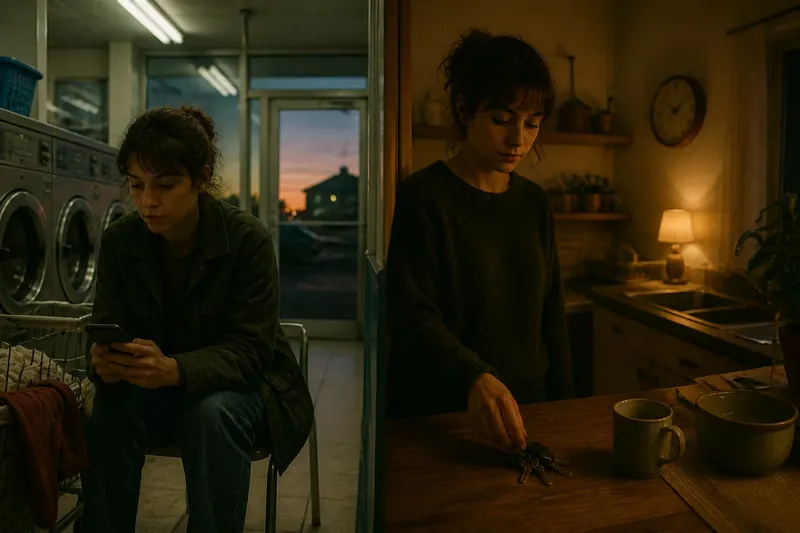
A hard cut or dissolve can make the same change of scene feel like a jolt or a passage of time. Imagine a short film in which Mara leaves a laundrette at dusk and appears later in a quiet kitchen; the editor’s transition will shape whether we feel a clean change of place, a lingering connection, or time slipping away.
This invented situation is a useful way to examine the choice, because the scenes already have a clear relationship. Mara has been waiting for a phone call, then goes home after the laundrette closes. The question is not which transition looks more elegant. It is what the audience should understand and feel at the boundary.
A hard cut makes the boundary legible
A hard cut replaces one shot with another immediately. The image of the laundrette gives way to the kitchen without a visible blend between them. The cut is abrupt in a literal sense, but its effect need not feel harsh: viewers are accustomed to moving between shots, and a well-motivated cut can pass almost unnoticed.
In this case, a cut from the laundrette’s bright fluorescent interior to the kitchen’s dim, still room could establish a strong contrast. The change of scene is unmistakable. The audience sees that Mara has gone somewhere else, and the visual difference can make home feel private after the public bustle of the laundrette.
A cut is especially clear when the new scene begins with an image that supplies its own bearings: Mara placing her keys on the table, for example, or the phone waiting on the counter. The transition does not have to explain the journey. It can simply announce that the story has moved on and let the new shot do the orienting.
That directness also helps preserve uncertainty. If the audience should not yet know how much time has passed, a cut can withhold the answer. The next action, costume, light or line of dialogue may reveal it later. A transition is not obliged to label every change as it happens.
A dissolve makes the boundary visible
In a dissolve, one image fades away as the next appears over it. For a moment, both scenes occupy the frame. That overlap makes the transition itself perceptible: the audience watches one place recede while another takes its place.
For Mara’s move from laundrette to kitchen, a dissolve could suggest that the wait has stretched into a later part of the evening. The laundrette’s rotating machines might remain faintly visible over the kitchen table before disappearing. The transition gives the change a duration, rather than snapping directly from one location to another.
But the overlap also creates a relationship between the images. If the laundrette’s circular window aligns with a round kitchen clock, the dissolve may encourage viewers to connect the two shapes. If the images have no meaningful visual or emotional relation, the blend can feel like decoration laid over a scene change that needs no decoration.
A dissolve therefore does more than soften a cut. It asks the audience to hold two moments together briefly. That can suggest memory, passage, association or continuity, but it does not automatically mean “time has passed”. Context decides whether the overlap feels reflective, dreamy, fluid or simply slow.
The scene change depends on what the audience should carry
Return to the invented film. At the laundrette, Mara has watched her phone without receiving a call. In the kitchen, she finally hears it ring. The editor can frame the transition around several different audience experiences.
- For a clean change of location: cut from Mara leaving the laundrette to her hand setting down her keys. The new action quickly establishes the kitchen and keeps attention on what happens next.
- For a sense of waiting: dissolve from the laundrette’s turning machines into the kitchen, allowing the image overlap to make the intervening time feel continuous and heavy.
- For a sharp emotional contrast: cut from the laundrette’s busy light to the still kitchen. The immediate contrast can make the silence at home feel newly exposed.
- For a visual association: dissolve between a round washing-machine window and the kitchen clock, if their shapes support the film’s attention to time.
These are not fixed meanings. A dissolve can be brisk, and a hard cut can connect scenes with great tenderness if the images and sounds carry the feeling. The editor’s decision rests on the scene’s job: establish a new place, mark elapsed time, preserve a mood, create contrast or invite an association.
Sound can soften or sharpen either transition
The image is not the only part of the boundary. A sound may continue across a cut, begin before the new image appears, or stop with the outgoing scene. Those choices can alter the transition without changing its visual form.
In Mara’s story, the laundrette’s machine rhythm could end at the cut, making the kitchen’s quiet feel sudden. Alternatively, the phone’s ring could begin over the final image of the laundrette before the kitchen appears. That early sound gives the audience a clue about the next scene and links the two places through anticipation.
A dissolve can also sit beneath uninterrupted sound, but the combination should have a purpose. If the phone rings through the overlap, the sound may bridge the gap and pull the viewer towards the kitchen. If the laundrette’s ambience lingers too long after the picture has moved on, it might instead make the transition feel haunted or dislocated. The sound’s timing is part of the edit, not an afterthought.
It is not worth adding a dissolve merely because the scenes are in different locations, or carrying every sound across the boundary to make the edit feel smoother. A transition earns its place when its effect helps the audience read the relationship between moments. If a plain cut already does that, extra treatment may only draw attention to itself.
How should you choose between a hard cut and a dissolve?
Does a hard cut always mean no time has passed?
No. A cut can move the story forward by minutes, days or longer without announcing the interval. Clues in the next scene—light, clothing, action or dialogue—can establish the change.
Does a dissolve always signal a flashback?
No. A dissolve can connect present-tense scenes, suggest a pause or make a visual association. Its meaning comes from the images and surrounding story, not from the transition alone.
Can a dissolve make a scene change confusing?
It can if the overlapping images obscure where the new scene begins or combine details that compete for attention. A clear incoming image and a purposeful overlap help viewers follow the shift.
Can sound bridge a hard cut?
Yes. A sound that begins before the new image, or continues over the cut, can connect two scenes while the picture changes instantly. This can preserve continuity without using a dissolve.
Make the edit answer a scene-level question
For the invented film, suppose the intended result is for viewers to feel that Mara has spent the evening waiting, not merely travelled home. The editor might choose a dissolve from the laundrette’s turning drum to the kitchen clock, then let the phone ring as the kitchen becomes clear. The observable result should be a transition that foregrounds elapsed time and directs attention towards the call. If the intended result is instead a brisk reveal of the ringing phone, a hard cut to the kitchen may serve the scene better.
When choosing a hard cut or dissolve, ask what must cross the boundary: a location, a mood, an interval, a sound or an idea. Then watch the transition in context, with the shots before and after it. A cut should feel like the right break; a dissolve should make its overlap matter. That distinction gives editors a precise way to shape a scene change without asking the transition to do the story’s work by itself.