The Borrowed Room: How Existing Locations Shape Production Design
Existing locations shape production design through fixed sightlines, surfaces and light. Learn how to turn a room’s limits into clear, expressive choices.
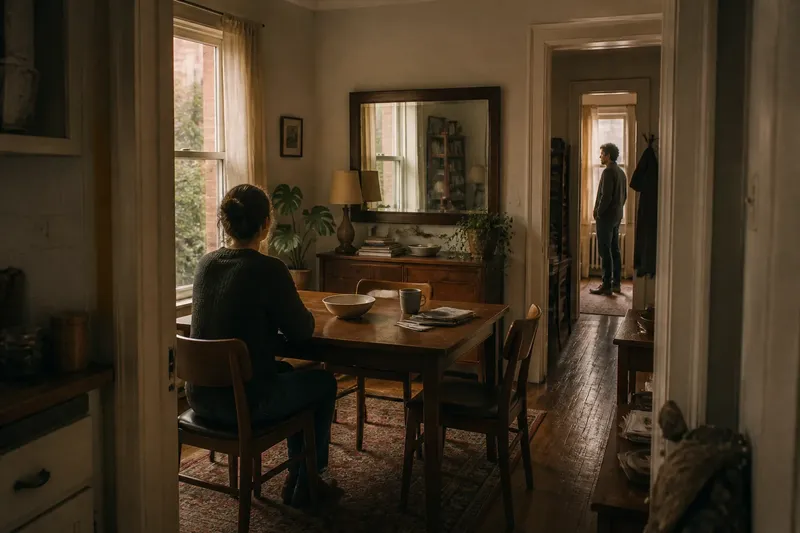
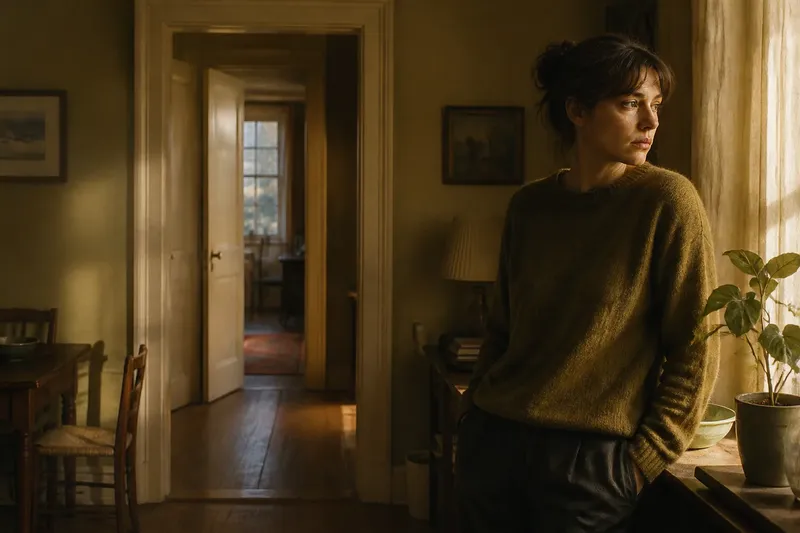
A narrow doorway can decide where a scene’s argument happens. Existing locations shape production design before a prop is carried in: their sightlines, surfaces and fixed fittings set limits that can also become useful compositional tools. The designer’s task is not to disguise every inconvenient feature, but to decide which ones should lead the eye and which should recede.
Read the room from the camera’s side
A location scout may enter through the front door; a camera rarely has to. Walk the room from the likely camera positions and note what each view includes: a window edge, a corridor beyond, a mirror catching the opposite wall, or an exit that sits directly behind an actor. Those details can change the apparent geography of a scene.
Make a simple plan, marking doors, windows, built-in cupboards and any large feature that cannot move. Then stand or place a viewfinder at the proposed camera positions. A doorway that seems incidental in person may dominate the frame, while an attractive fireplace may disappear behind a performer as soon as the camera turns.
Pay particular attention to reflected views. Mirrors, polished glass and glossy cabinet doors can reveal crew, lights or parts of the room that the main camera angle hides. Instead of treating reflection as a technical nuisance alone, consider whether it can add depth or show a character’s relationship to the space. If it cannot serve the scene, choose a camera position or surface treatment that removes the unwanted view.
Let fixed features organise movement
Built-in features make the room’s traffic visible. A kitchen island divides two people; a narrow hall makes passing feel deliberate; a door that swings into the room can interrupt a clear path. Blocking—the arrangement of performers’ movement—works best when it acknowledges these facts rather than asking actors to move through an imaginary version of the space.
Imagine a scene set in a rented dining room with a broad window and a table that cannot be removed. The director wants one character to avoid another. The designer might place the chair nearest the window slightly apart, giving the first character a plausible reason to stay at the edge of the group. The observable result is a separation the audience can read in the frame, created by furniture and movement rather than an added partition.
Keep the action legible from the intended camera angles. If a doorway is the only entrance, a performer crossing it may briefly obscure another actor’s expression. That can be useful when concealment matters; otherwise, adjust the timing or path so the entrance remains visible. A floor plan helps, but a walk-through with chairs, tape or stand-ins can reveal collisions that a drawing misses.
Choose surfaces for what the camera can see
Existing surfaces carry visual information before dressing begins. Scuffed paint suggests repeated use; glossy tiles throw back highlights; patterned wallpaper can compete with faces or costume. The question is not simply whether a surface looks attractive, but what it does at the camera distance and lighting direction the scene needs.
Look at paint, wood, stone and fabric in the actual room rather than relying only on photographs. A pale wall may appear much brighter when a window faces it, while a dark floor can absorb detail in a wide composition. Small sample boards or fabric swatches held in place help compare the room’s existing palette with proposed additions.
Covering a feature is not always the best answer. A removable cloth, a carefully placed piece of furniture or a change in framing may be less disruptive than repainting or altering a location. If the property must be returned to its original condition, favour reversible choices and confirm any restrictions with the location owner.
Use the window as a design element
A window brings a view, a direction of light and a visible boundary into the frame. Check what lies beyond it from each planned camera angle: a blank wall, passing traffic, neighbouring windows or changing daylight can all become part of the scene’s appearance. Curtains and blinds offer control, but their colour and texture also become set dressing.
Window light can make a room feel open or expose the limits of a small interior. A sheer curtain softens the view while keeping the opening readable; a heavier treatment can make the room feel enclosed. The choice should follow the scene’s intended mood and the camera’s view, not a general rule that every window ought to be shown.
For a continuous scene, note how the window’s position affects matching views. If the camera moves between angles, a change in the visible exterior or daylight can make the room seem to shift. Production teams can manage this through shooting order, controlled coverings or a carefully selected angle, depending on the location and the scene’s needs.
Questions about designing around an existing location
How can a small room feel larger on screen?
Keep the camera’s view through a doorway or towards a second visible area when that supports the scene. Avoid filling every edge with furniture, and check that a wide lens does not make nearby objects feel distorted or pull attention away from performers.
Should a location’s flaws be covered?
Cover a feature when it distracts from the action or conflicts with the scene’s design, but retain it when it gives the room useful character. A visible repair, dated fitting or uneven wall can suggest a lived-in place more convincingly than a uniformly polished surface.
What should a location scout photograph?
Photograph each usable camera angle, not only the room’s most attractive view. Include doors, windows, reflective surfaces and the route actors might take, then add a simple plan so the images remain easy to interpret later.
Can furniture be moved for filming?
Ask the location owner and check the relevant agreement before moving or altering anything. When furniture has to stay, treat its position as part of the design problem and build the blocking around it.
Keep the room’s identity without clutter
Borrowed rooms often arrive with objects that look plausible but say little about the characters. Select a few pieces that clarify who uses the space: a working lamp, a stack of post, a coat on a hook. Each addition should earn its place in the frame by contributing to the room’s use, tone or story.
What is not worth the effort is dressing every visible surface simply because it is available. Excess objects can muddy the composition and make the space harder to read. Before adding something, check whether the camera sees it, whether it competes with the action and whether a simpler arrangement would communicate the same idea.
Say a scene takes place in a narrow rented kitchen with a fixed island, a reflective cupboard door and a window facing a neighbouring wall. The designer’s starting inputs are the room plan, the intended camera position and the requirement to keep the island in place. First, a viewfinder check shows the cupboard reflecting the camera; shifting the angle removes the reflection but hides the actor at the sink. Next, placing a removable cloth over the cupboard clears the reflected view while preserving that composition. The window then reads as a blank patch, so a sheer curtain softens it without concealing the opening. In the resulting frame, the island still divides the actors, the sink-side performer remains visible and the distracting reflection is gone; the trade-off is a softer, less distinct view through the window.
The strongest production design in an existing location often comes from a precise decision about what to leave alone. Existing locations shape production design through the choices they make unavoidable: a doorway can become a threshold, a window can define the room’s light, and a marked surface can give the frame its history. Read those features from the camera’s position, then add only what helps the audience understand the space.