The Off-Centre Face: What Changes When a Subject Leaves the Middle
Learn how off-centre framing directs attention from a face to the space around it, revealing relationships, pressure and possibility inside a film image.
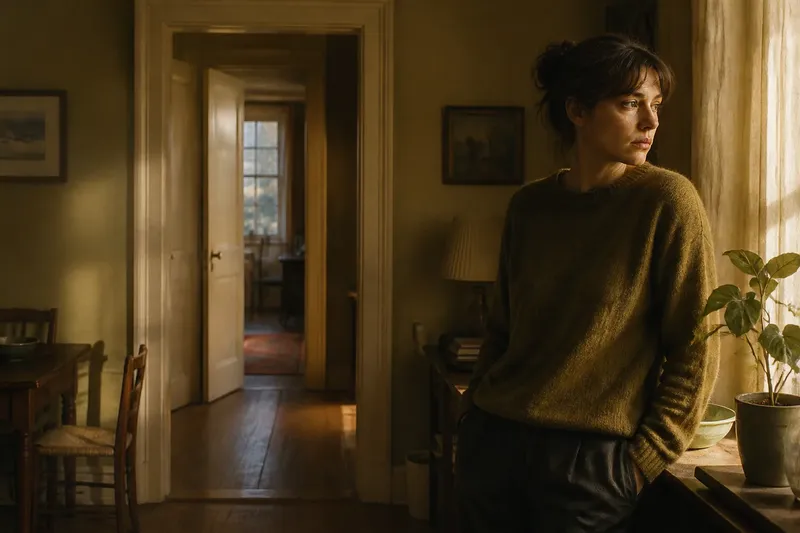
An off-centre face makes the rest of the image part of the scene’s action. In film framing, shifting a subject away from the middle can turn a doorway, an empty chair or another character’s glance into something viewers actively read. The useful question is not simply where to place the face, but what its position lets the surrounding space say.
Off-centre framing starts with a relationship
Begin by identifying the relationship the shot needs to show. Is a character listening to someone just outside the frame? Avoiding a person across the room? Waiting for an entrance? Each situation gives the empty area a different job.
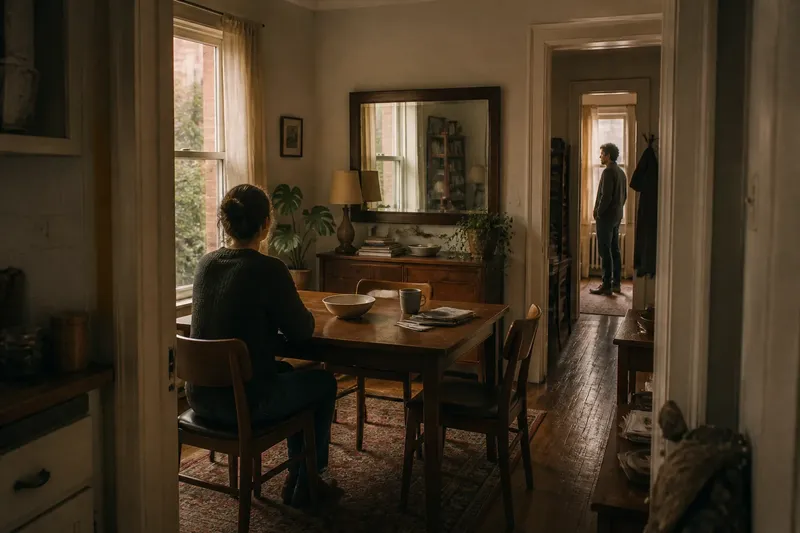
Imagine a character standing near the right edge of a kitchen frame, looking towards an open doorway on the left. If the doorway remains visible, the shot can hold both the character’s hesitation and the possibility of someone arriving. Centre the face instead, and the doorway may become incidental; move the character further across, and the frame can make the distance feel more pressing.
Before adjusting the composition, write down the shot’s main relationship in plain terms: person to doorway, face to listener, figure to landscape. This keeps off-centre placement from becoming a decorative habit. A subject can sit away from the middle and still leave the frame with nothing meaningful to do.
Choose the side that supports the subject’s attention
Look at the direction of the character’s eyes, head and body. A person looking towards the left edge often benefits from visible space in that direction, sometimes called looking room. The space gives the gaze somewhere to land and suggests that the unseen object or person matters.
That is a useful starting point, not a rule. A character looking towards the edge with little room in front of them may feel cornered, impatient or trapped. The same placement can be expressive precisely because it denies the gaze an easy destination. Decide whether the composition should welcome the look or resist it.
Also check whether another person’s eyeline creates an implied connection. If one character looks right and another looks left, their positions may suggest a conversation even before both appear in the same shot. If the eyelines seem to miss each other, that gap can suggest distance or misunderstanding. Make sure the screen directions remain clear enough for viewers to follow.
Give the surrounding space a specific purpose
Once the face is placed, inspect what occupies the open part of the frame. A window can connect a character to activity outside; a passage can point towards a possible entrance; a blank wall can make their isolation feel stark. The setting becomes more than background when its details help shape how we read the character.
Keep only the details that contribute to the shot. A lamp near the edge, a bright patch of window or a cluster of objects can pull attention away from the face or the relationship you want viewers to notice. You need not strip a frame bare: adjust the angle, focus, lighting or subject position so that supporting details remain legible without becoming accidental rivals.
Pay attention to visual weight as well. Brightness, contrast, colour and sharpness all affect where the eye goes. A small, bright object can compete with a larger, darker face. If that object matters, let the competition serve the scene; if it does not, simplify or soften it.
Test the composition in the finished shot
Judge the framing in motion rather than relying on a still image. A character may enter, turn, sit down or cross the room, changing the amount and meaning of the open space. A composition that feels balanced at the start can become cramped as the action unfolds.
Watch the shot at its intended size and consider what the viewer notices first, then second. If attention goes straight to a bright background object, the face’s placement may not be doing the work you intended. If the viewer sees the face, follows its gaze and discovers the doorway, the frame may be guiding attention in a useful sequence.
Try changing one element at a time: shift the subject, alter the camera angle, reduce a distracting detail or ask the actor to turn slightly. Compare the results against the relationship you identified at the outset. This makes the adjustment legible; changing several things at once makes it harder to tell what improved the image.
Do not spend time chasing a perfectly balanced frame for its own sake. Film images can be deliberately lopsided, and an empty area need not contain a conspicuous prop to justify its presence. It is worth adjusting the image only when the space clarifies, complicates or productively withholds something from the viewer.
What does an off-centre face make viewers notice?
Should a character always have looking room?
No. Space in front of a gaze can make a connection or destination readable, while a tight edge can create pressure or confinement. Choose the arrangement that fits the scene rather than applying a fixed rule.
What is negative space in a film frame?
Negative space is the area around or between the main subjects. It may be empty, or it may contain a wall, doorway or landscape; its significance comes from how that area relates to the people and action.
Can an off-centre composition work in a close-up?
Yes. A close-up can leave room for a gaze, a second face or a meaningful background detail, provided those elements remain readable. The tighter the shot, the more a small shift in eye position or edge spacing can change its effect.
How can I tell if the frame feels accidentally unbalanced?
Check whether the visual weight on each side relates to the scene’s action, and whether viewers can follow the intended glance or connection. If a bright detail draws attention for no narrative reason, or the open space points nowhere, reconsider the placement.
Let the composition change as the scene changes
An off-centre composition does not have to stay fixed in meaning. A camera move, a second character entering, or a figure turning away can transform open space from invitation into absence. Ask what the frame says at the beginning and what it says after the action; if the shift matters, keep both moments visible within the shot.
When assessing film framing, follow the line from face to gaze to surrounding space, then notice where your attention settles. That simple viewing habit can reveal how a director makes a doorway feel charged, a conversation feel strained or a solitary figure feel exposed without adding dialogue. The face may leave the middle; the relationship it creates should remain at the centre of your attention.